
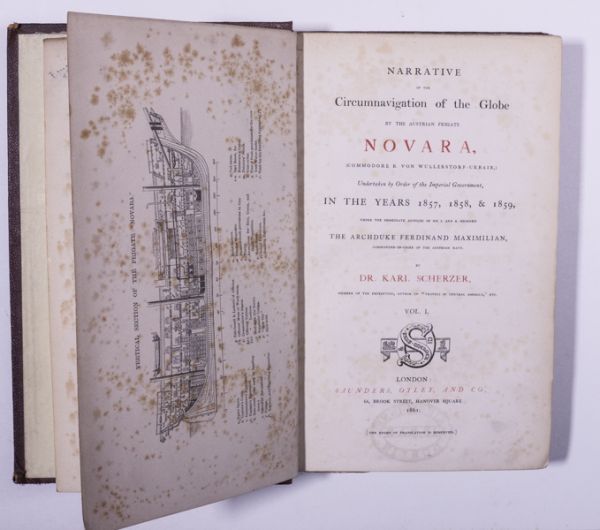
Narrative Of The Circumnavigation Of The Globe By The Austrian Frigate 'Novara' —
Undertaken by Order of the Imperial Government, In the Years 1857, 1858 & 1859, Under the Immediate Auspices of the Austrian Navy.
By Scherzer, Dr. Karl
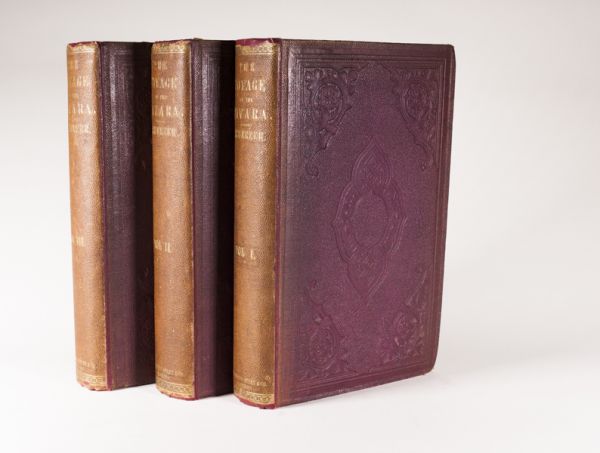
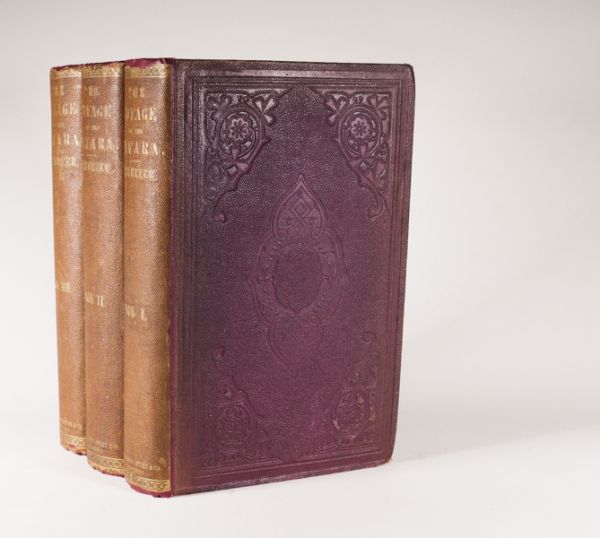
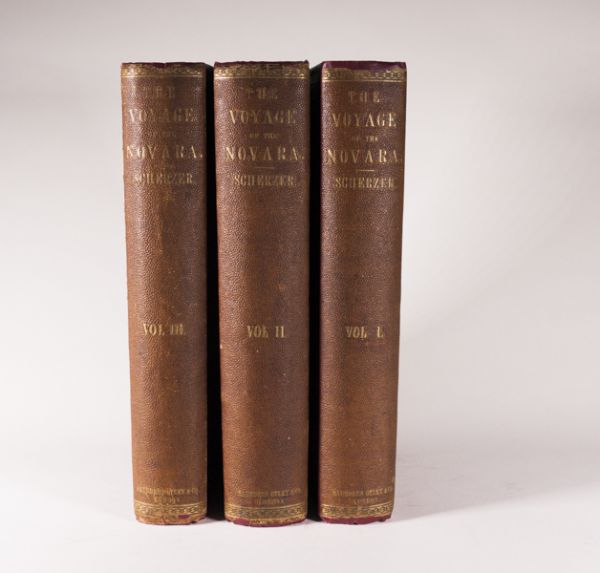
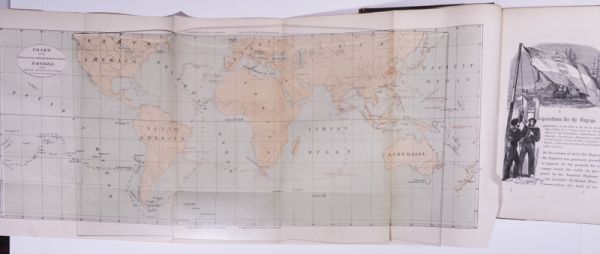
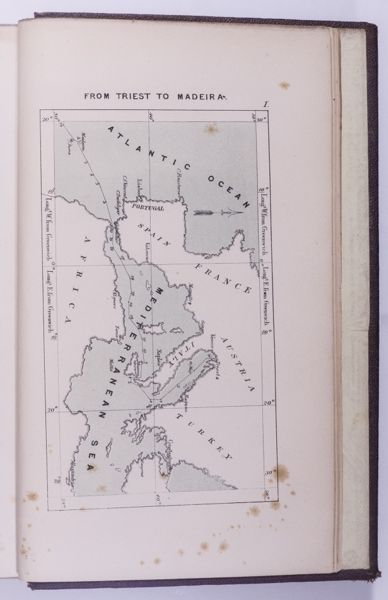
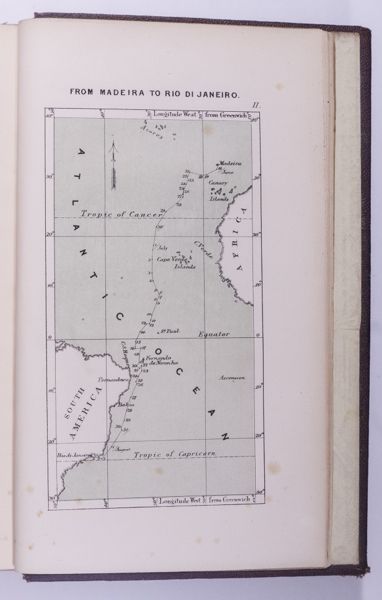
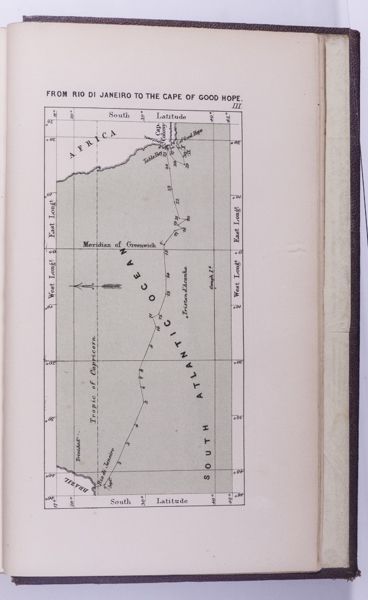
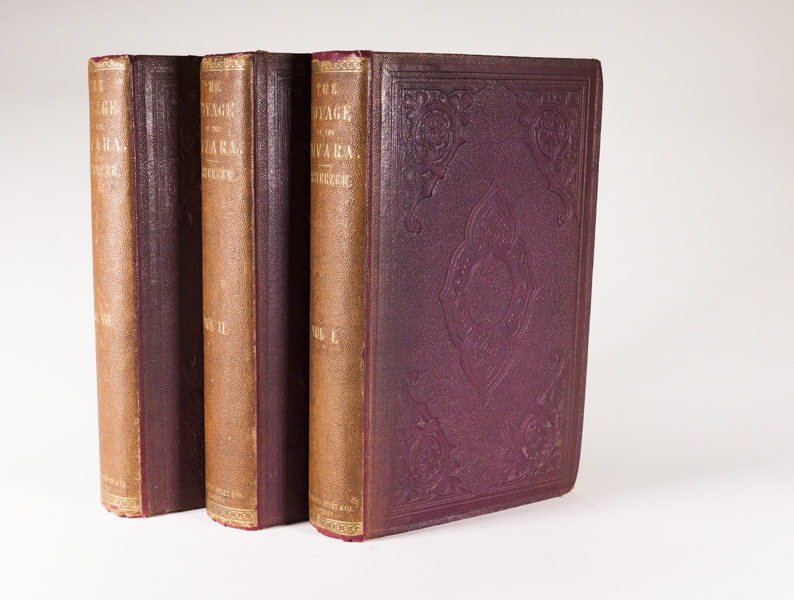
London: Saunders, Otley and Co. 1861-1863, First English Edition. Complete in 3 volumes. Sm4to – 25.9 cm. Publisher’s original ornate de-bossed red cloth. Volume 1: [Lv], 484, (10) pp. Frontis vertical section view of the frigate “Novara”, 7 full-page color maps, 1 large fold-out color map, 52 plates in text; Volume 2: [ix], (1), 627 pp., 8 illustrations in text; Volume 3: [vi], (1), 544 pp. Index, Errata. All 3 volumes uniformly professionally re-cased with original spines and hinges reinforced, former King’s Inn Library Dublin Stamp. This is a Very Rare and complete set of significant publications in Very Good condition. Sabin 77620; Hill p. 565; Ferguson 15471.
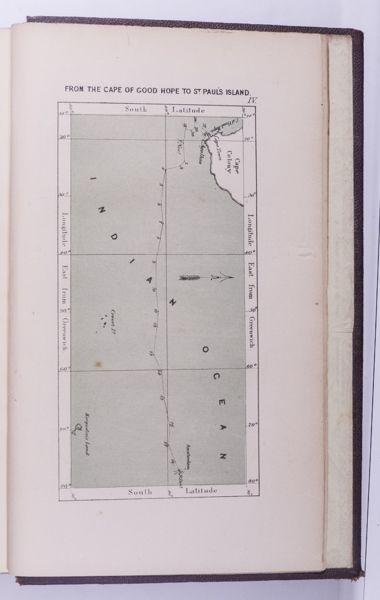
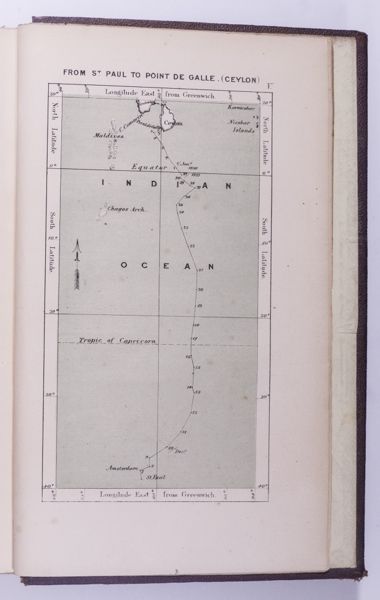
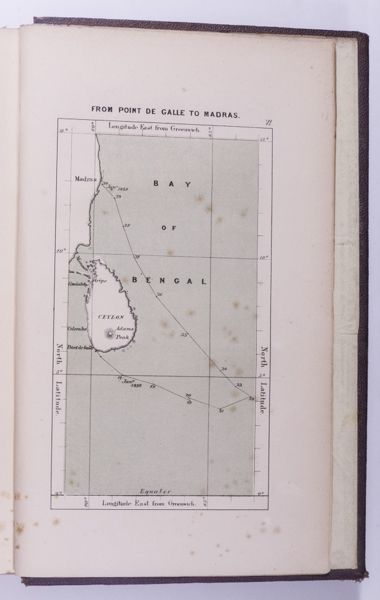
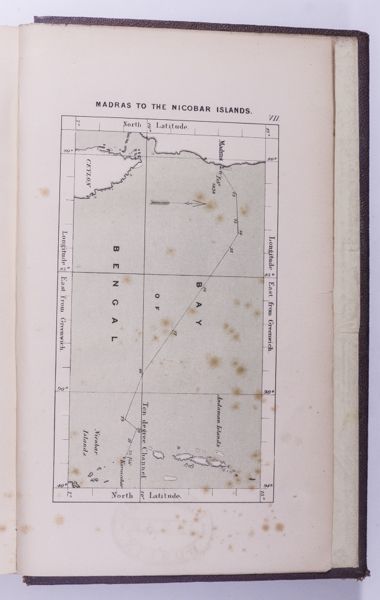
The circumnavigation of the earth from April 1857 through August 1859 by the “Novara” was one of the most important journeys for what became the Naturhistorisches Museum in Vienna. A number of eminent natural scientists joined the voyage, including Georg Ritter von Frauenfeld, curator in the invertebrate department of the Imperial museums. The material collected during the expedition was voluminous and continues to be examined and published by prominent scientists up until the present time. The Novara-Expedition visited many locations to include Gibraltar, Madeira, Rio de Janeiro, Cape Town, St. Paul island, Ceylon, Madras, Nicobar Islands, Singapore, Batavia, Manila, Hong Kong, Shanghai, Puynipet island, Stuarts, Sydney, Auckland, Tahiti, Valparaíso, Gravosa, and Triest. They returned on 26 August 1859.
Dr. Karl Scherzer was a member of the expedition that included visits to Tahiti & other South Sea islands, Chile and an overland journey from Valparasio to Gibraltar via the Isthmus of Panama. The Novara Expedition was the first large-scale scientific, around-the-world mission of the Austrian Imperial war navy. Authorized by Archduke Maximillian, the journey lasted 2 years 3 months, from 30 April 1857 until 30 August 1859. The expedition in the frigate “Novara”, under the command of Kommodore Bernhard von Wüllerstorf-Urbair was composed of 345 officers and crew, plus 7 scientists on board. Preparation for the research journey was made by the “Imperial Academy of Sciences in Vienna” and by specialized scholars under direction of the geologist Ferdinand von Hochstetter and the zoologist Georg von Frauenfeld. The first coca plant (cocaine) investigations, in particular on St. Paul Island, the Nicobar Islands, and on New Zealand (first geological mapping by Hochstetter), created the bases for future geological research. The oceanographic research, in particular in the South Pacific, revolutionized oceanography and hydrography.
The collections of botanical, zoological (26,000 preparations), and cultural material brought back enriched the Austrian museums (especially the natural-history museum). They were also studied by Johann Natterer, a scientist who collected Vienna museum specimens during 18 years in South America. The geomagnetic observations made throughout the whole expedition significantly increased the scientific knowledge in this field. Finally, the expedition’s introduction of coca plant leaves made it possible to isolate cocaine in its pure form for the first time in 1860.
The results of the research journey were compiled into a 21-binder report of the Viennese Academy of Sciences, titled “Reise der österreichischen Fregatte Novara um die Erde — “journey of the Austrian frigate Novara around the earth”. Also published in 3 volumes, by K. Scherzer were many woodcuts under the same title.
$2800.00 -


